The show is the store.
Intro
ShopSense uses AI to turn the products people notice in entertainment into shoppable collections. For media companies, the opportunity is to connect the demand their content creates with a shopping destination they control, while that content is still holding the audience’s attention.
Studio is my redesign of ShopSense’s store builder agent, built around the show itself. The agent works from an episode’s stills: it finds the garments and suggests products to match. A model can find a coat that looks like Sydney’s. It can’t tell you whether it’s hers. So a reviewer decides what each match can claim, and the storefront prints that claim before the brand.
I owned the UX and interface design of Studio and the storefront it publishes.
Role / Scope
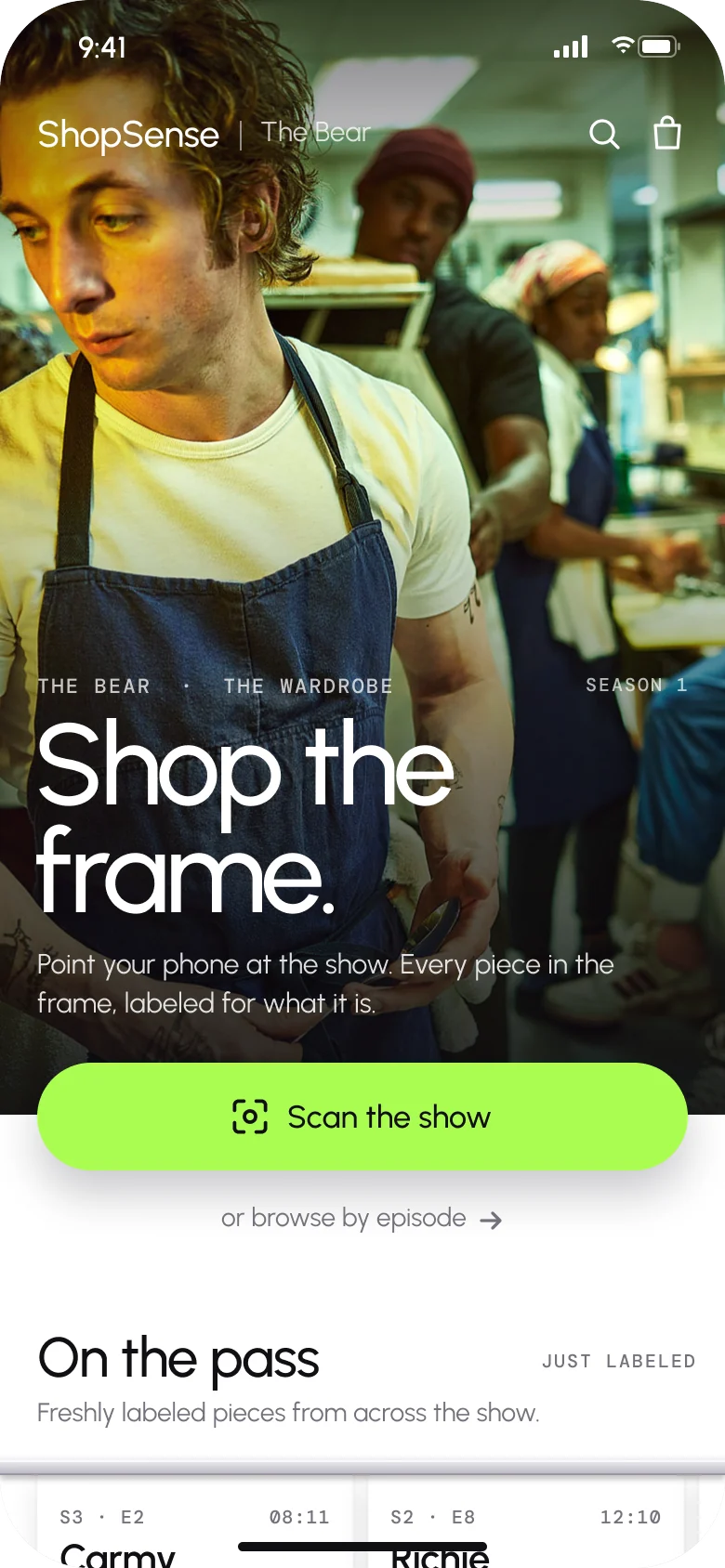
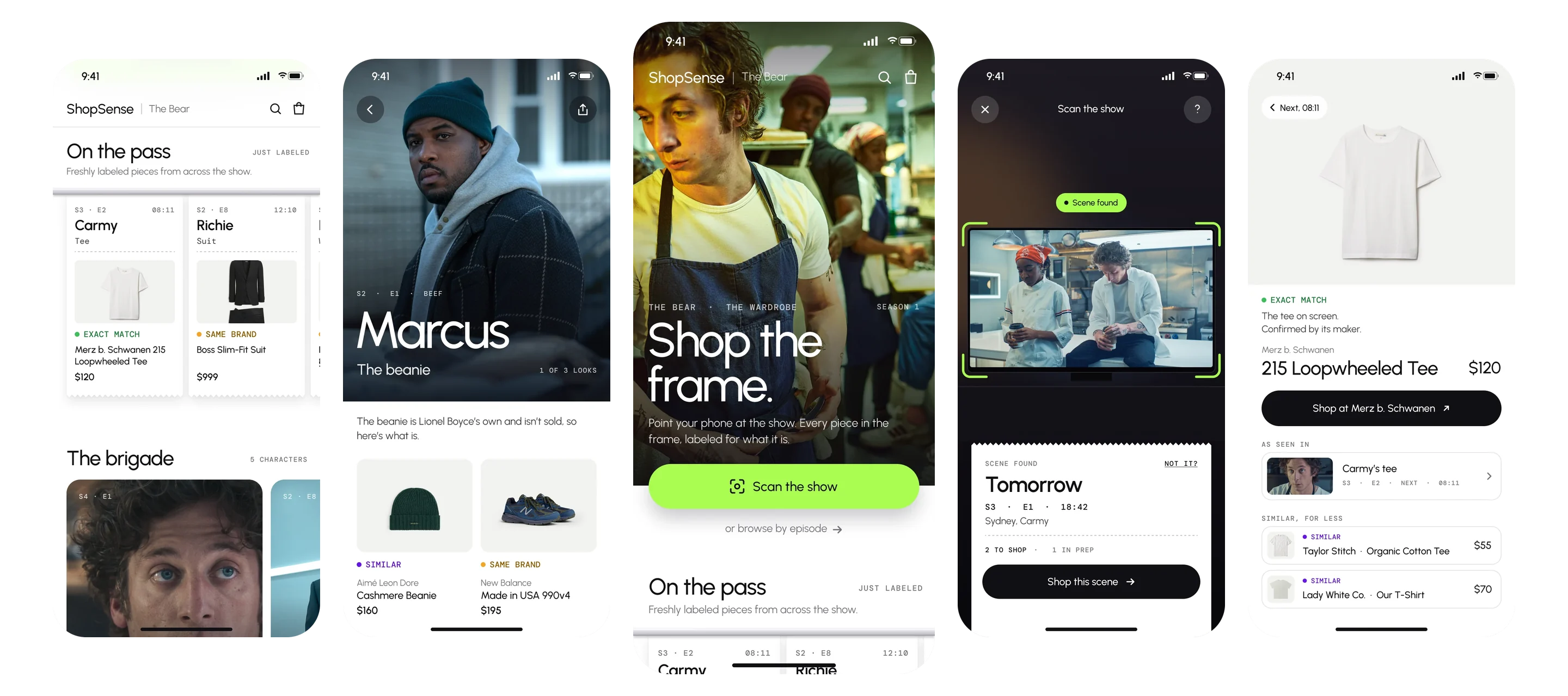
What Studio publishes. The store opens on the lens rather than a catalog: point the phone at the show and it finds the scene, with browsing by episode as the fallback. Below, freshly labeled pieces arrive as tickets on the pass, each with its label printed first.
Make AI production visible.
The overview starts with what the agent is producing and where that work stands. Garments found, the label mix, the review queue and each season’s store sit together, with the current run broken into the agent’s steps.
I brought those signals into one view because they answer different operational questions. How much has been produced? Which results need attention? Which stores can move forward? Generation volume alone cannot answer all three.
The review queue carries that overview into individual pieces. Selecting one shows the frame, the candidate product, why the agent held it, and the next action. The operator can move from the state of the workspace to the specific result that needs a decision.
Show the plan before the run.
A store starts as a brief. The team picks the season and its episodes, says in plain language what the store is for, and sets the rules: a price range, up to twelve products a collection, brand and retailer sites only, and the three labels.
The agent reads the brief and drafts a plan: five collections, each with the episodes and stills behind it. Nothing is matched or published until someone approves that plan, so the first decision a person makes is about what the store is for, before there are any results to judge.
Then the run shows its work. On each still it boxes what it found and sends each piece to a collection with its label, the maker’s own listing first wherever the piece is sold. Anything it can’t stand behind, like a coat made for the show, waits for a person.
Keep the output connected to its input.
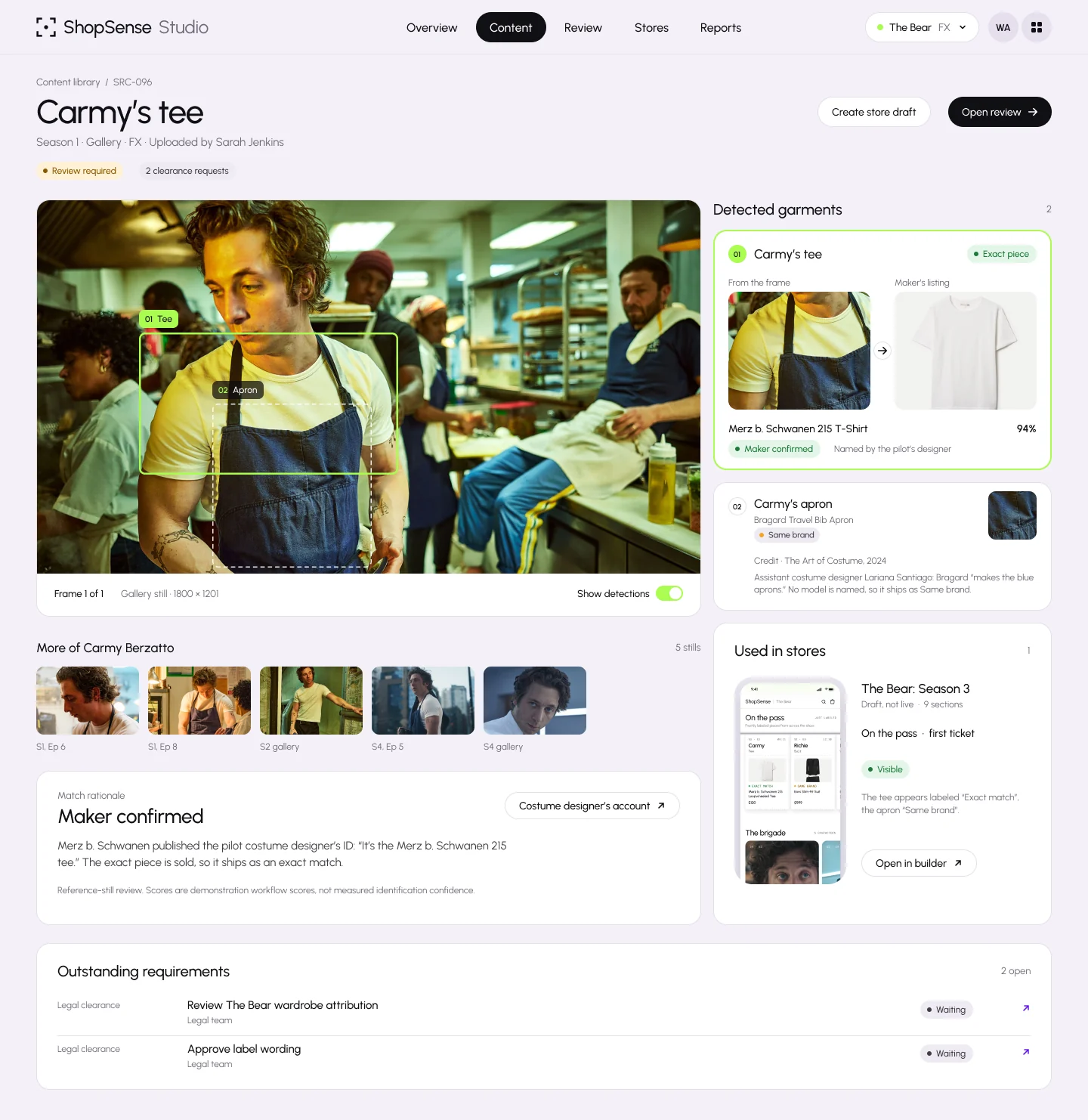
An AI-generated product candidate needs to remain connected to the content that produced it. I kept the reference imagery and candidate together in source detail and product review, alongside the source record and supporting information.
That relationship carries across the workspace. A source shows the product under consideration, its outstanding requirements, and the store using it. The operator can follow a result into the collection without losing the context needed to assess it.
This is also the basis of the consumer experience. The connection between a scene and a product is what makes the collection relevant. The workspace preserves that relationship so the storefront can use it.
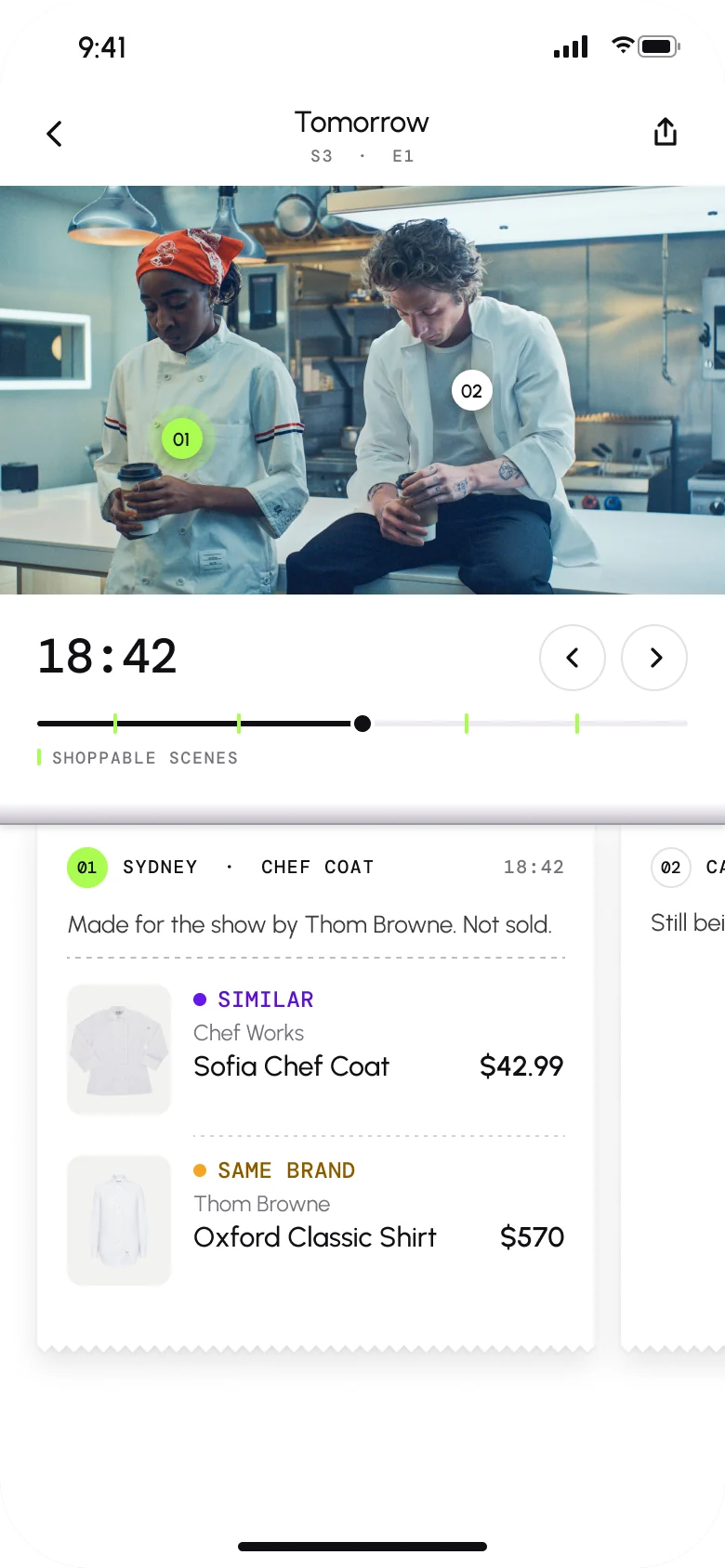
On the storefront, the scene stays attached to its products. The lens returns the scene rather than search results: the episode, the timecode, the frame and a ticket for each garment in it.
Make uncertainty actionable.
A model score is useful context, but it does not establish that a purchasable item is the garment shown on screen. The product needs to accommodate confirmed references, related products, and alternatives.
Sydney’s chef coat makes that distinction concrete. Thom Browne made the coat for the show, and the catalog candidate is a Chef Works chef coat: a similar double-breasted white coat, without the striped trim, and not the coat on screen. I placed the reference and candidate side by side, with the supporting account, comparison, and decision controls available in the same view.
The reviewer can reject the match, confirm an exact match where the evidence allows it, or label the candidate as a retail alternative, which the store shows as Similar. The decision is recorded, and it has a consequence beyond the review screen: it shapes how the product can be represented in the collection and what remains outstanding before release.
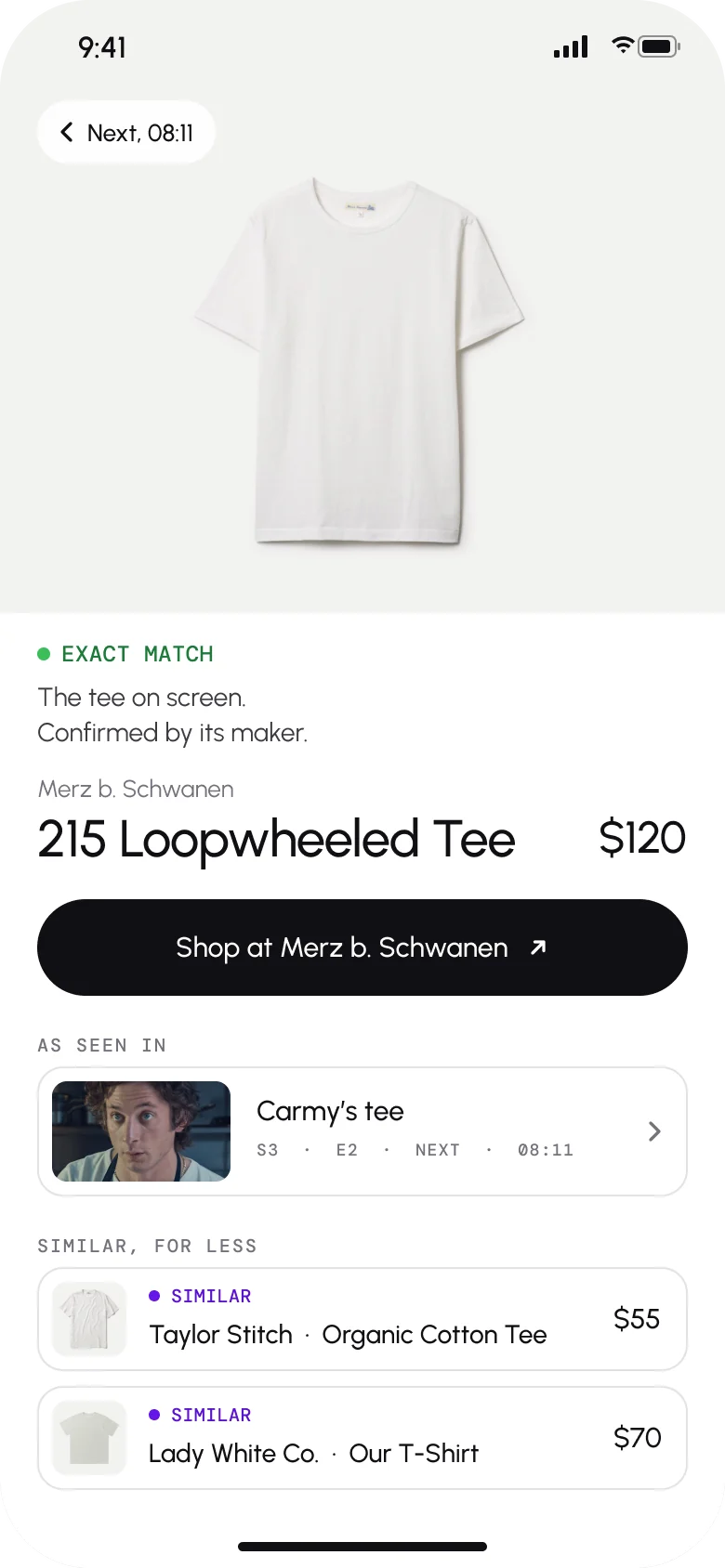
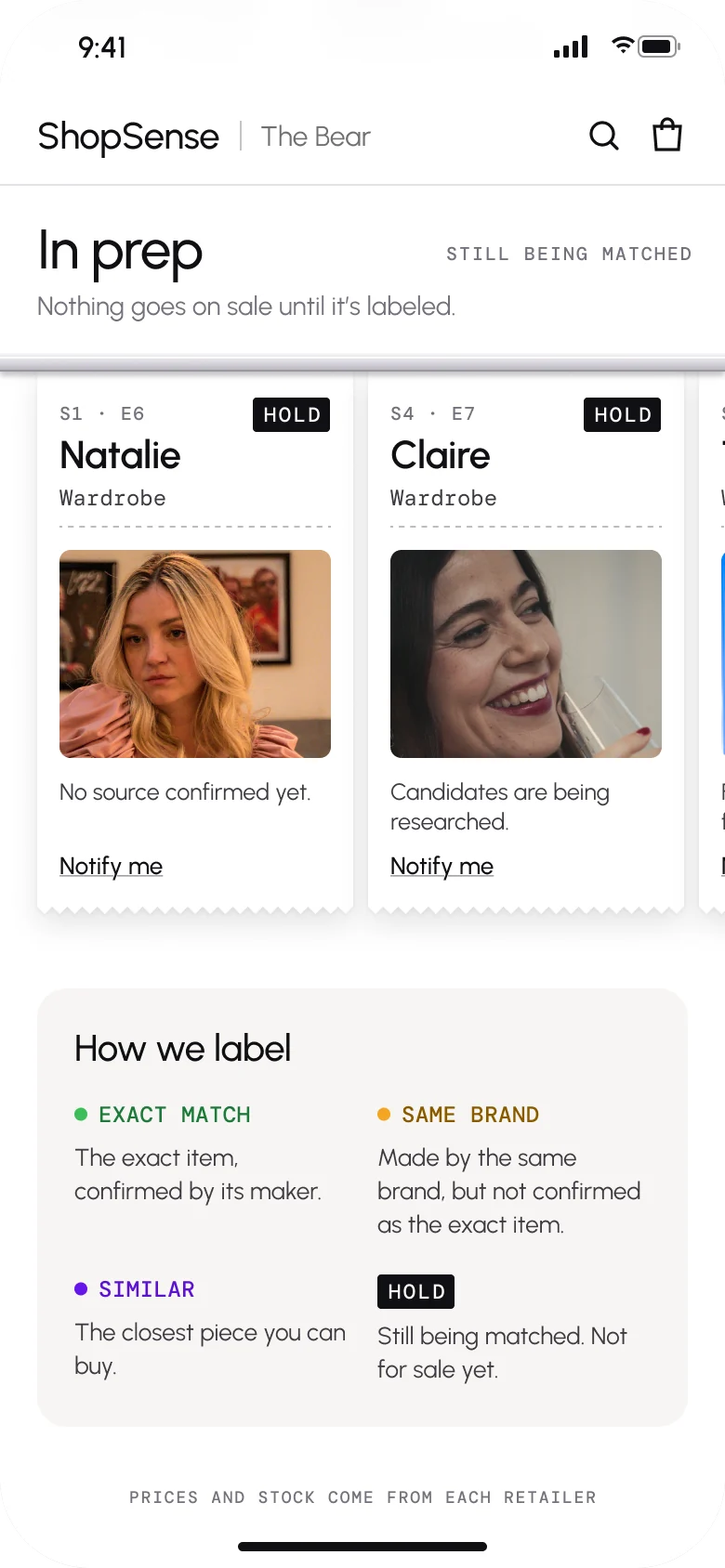
The review reaches the viewer. When the exact piece is sold, the page is that piece: Carmy’s tee, labeled Exact match and bought from its maker. When it isn’t, as with Sydney’s coat, the ticket says so and offers the closest piece, labeled Similar. Pieces still being matched show as HOLD instead of disappearing, so someone looking for Natalie’s wardrobe gets an answer, not an empty shelf.
From source to claim.
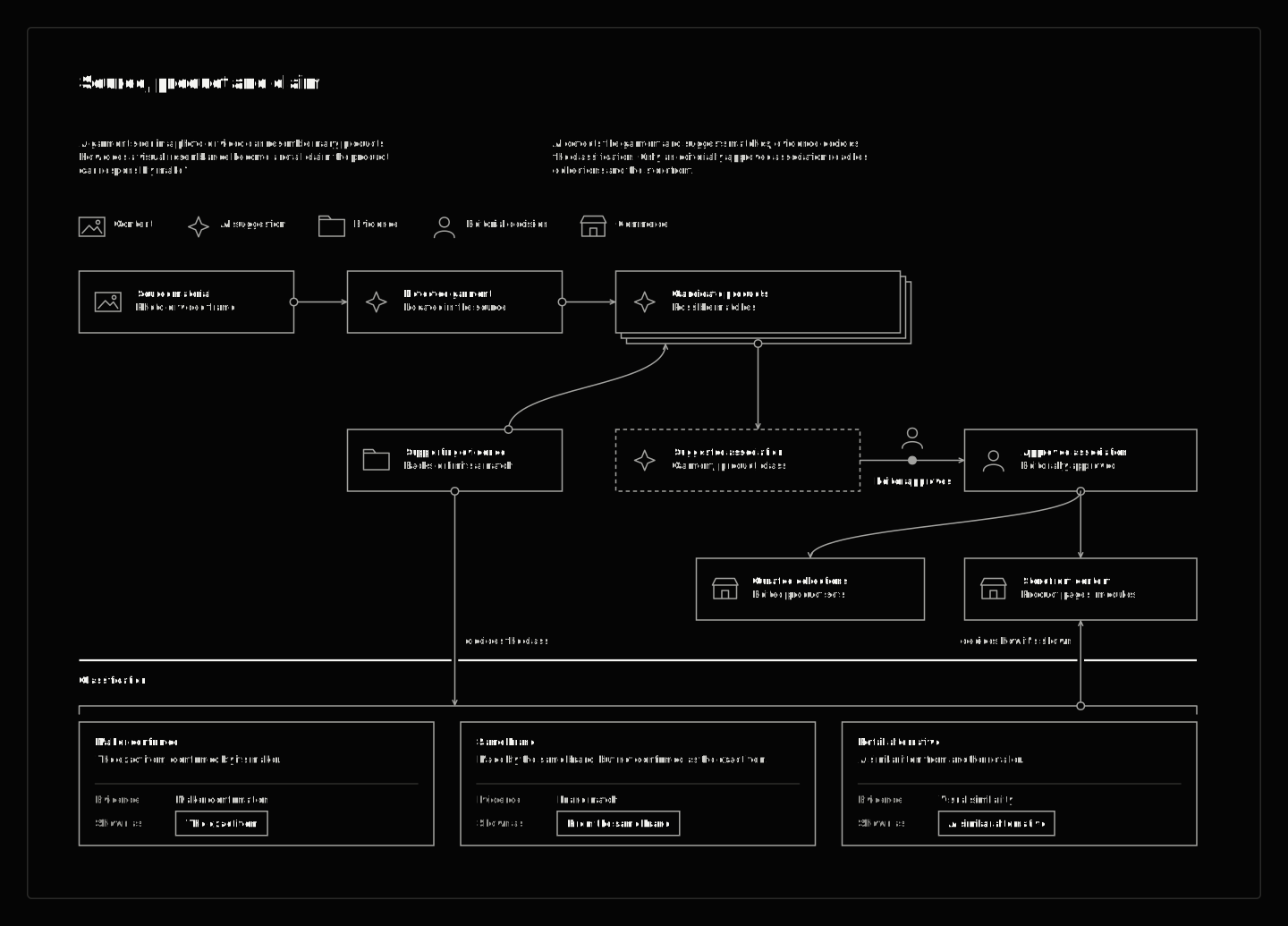
Review is one stage in the production workflow, and the stage with a visible consequence in the shopping experience. Evidence decides the class a product can claim, a reviewer decides whether the association is approved, and the class decides how the storefront shows it.
Turn the results into a collection.
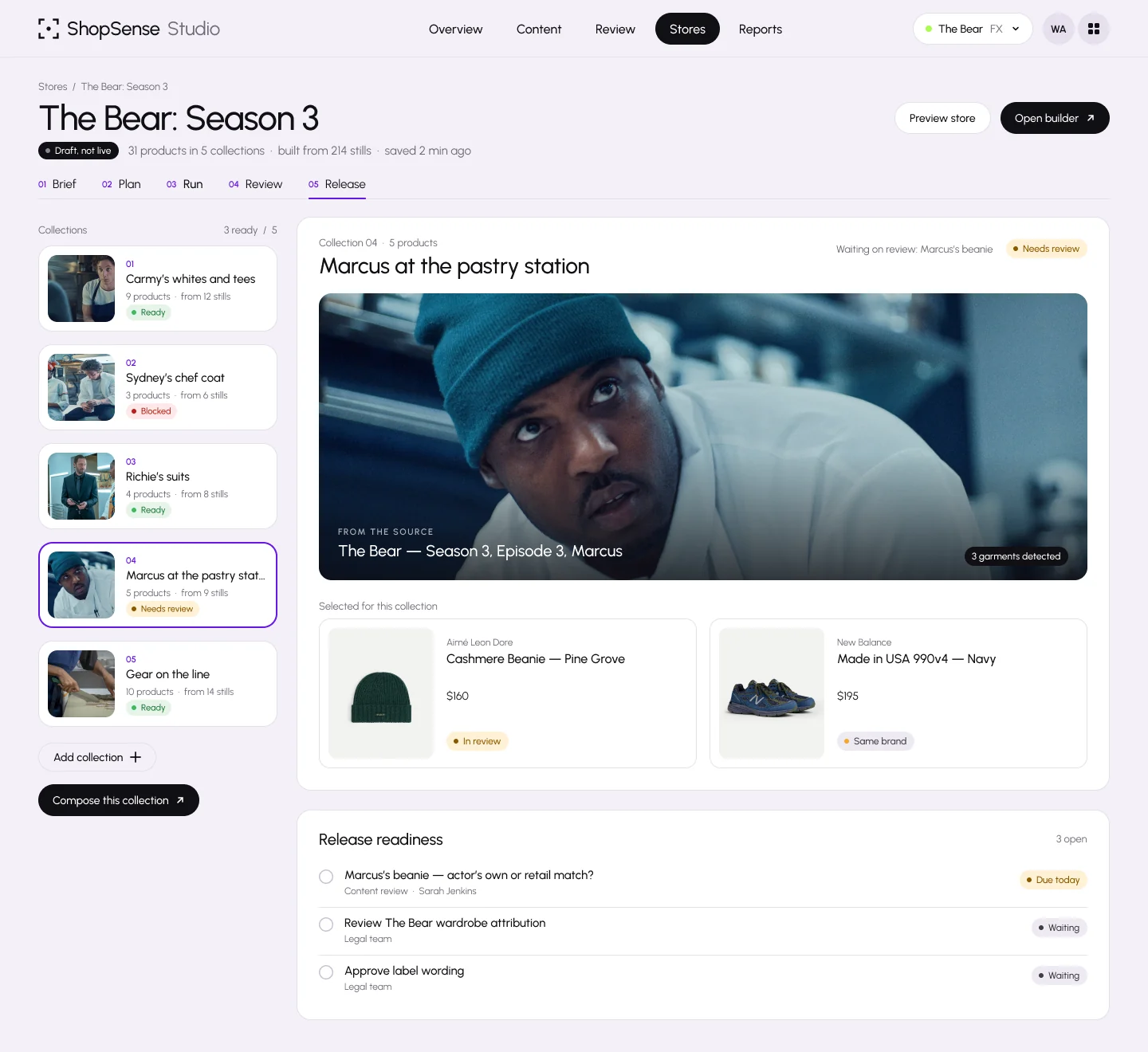
The plan’s five collections come back as one draft store. Three are ready. Sydney’s chef coat waits on legal, and Marcus at the pastry station waits on a single question for a reviewer: is the green beanie in this Season 3 still Lionel Boyce’s own, like the one the costume designer described in Season 2, or a piece someone can buy?
Until someone answers, the Aimé Leon Dore beanie stays in review and the collection can’t be released. The draft shows that one open decision next to the frame it came from, so nobody has to find it in a list of thirty-one products.
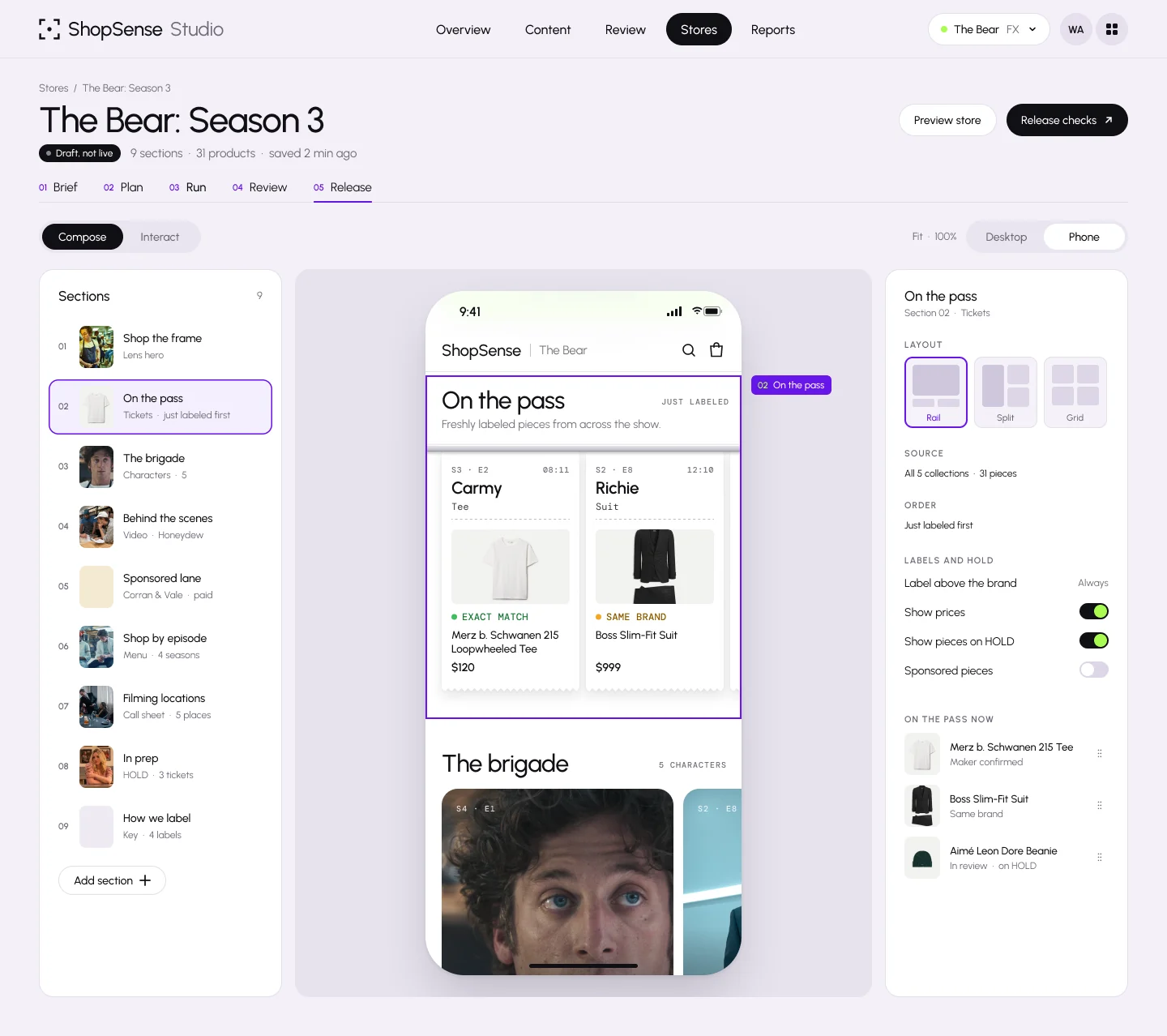
The builder composes the store from the same records. Its sections are the store’s modules, and the rules that matter are set once for all of them: the label prints above the brand, pieces on HOLD stay visible, and sponsored pieces stay out of the editorial sections. On the pass shows the beanie the way it would ship today: in review, on HOLD, visible and not for sale.
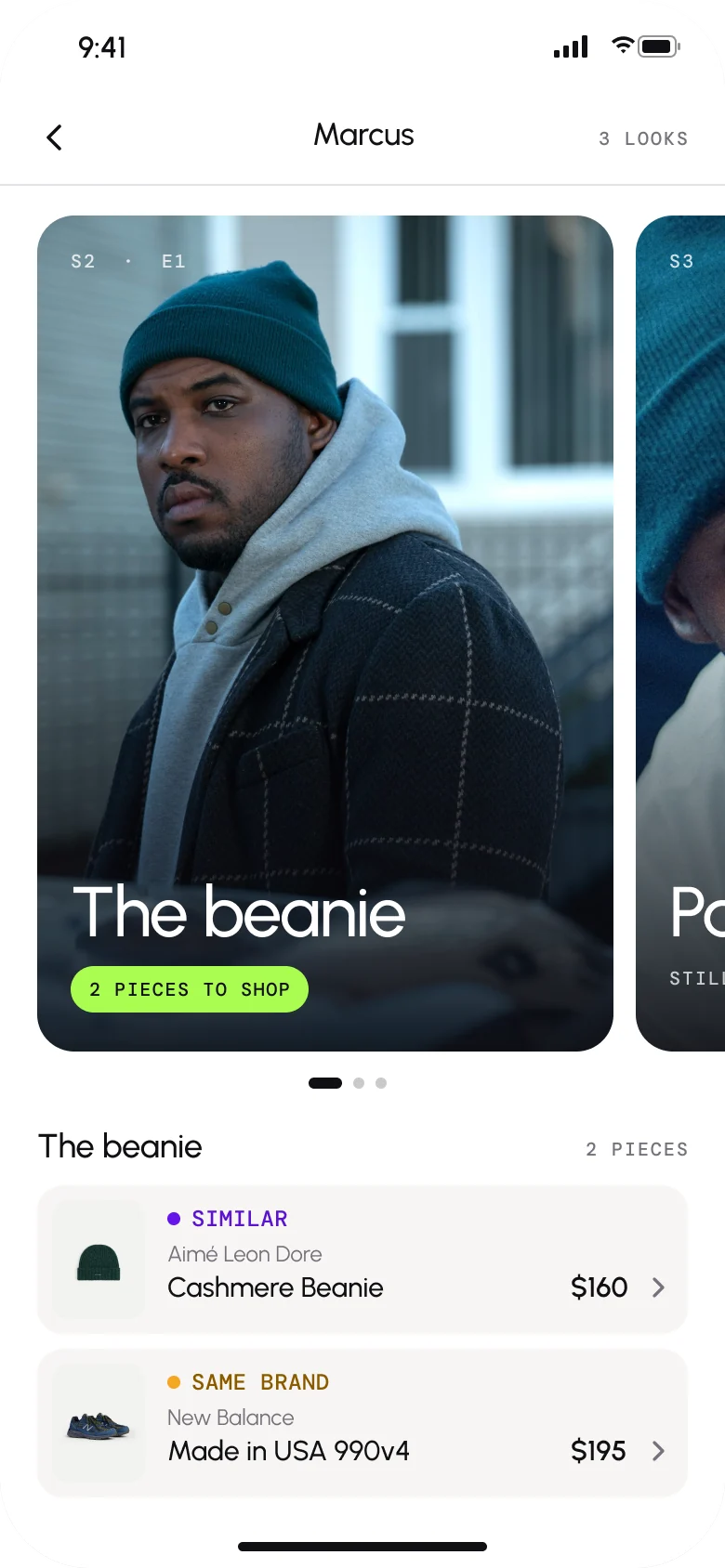
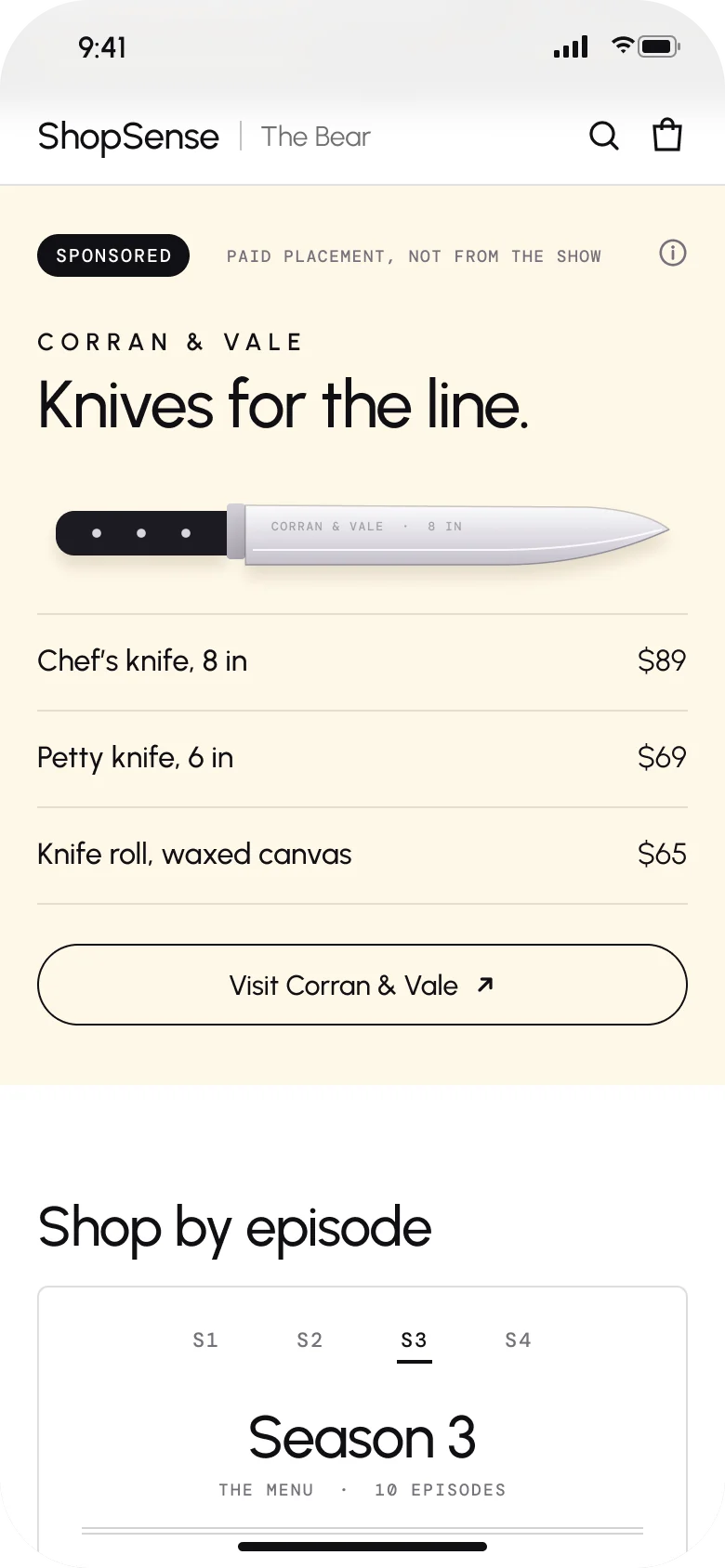
Once review labels it, the beanie reaches Marcus’s lookbook labeled Similar, beside the New Balance labeled Same brand. The sponsor lane carries no label at all: it sits on its own background, marked as paid placement and not from the show.
Connect readiness to release.
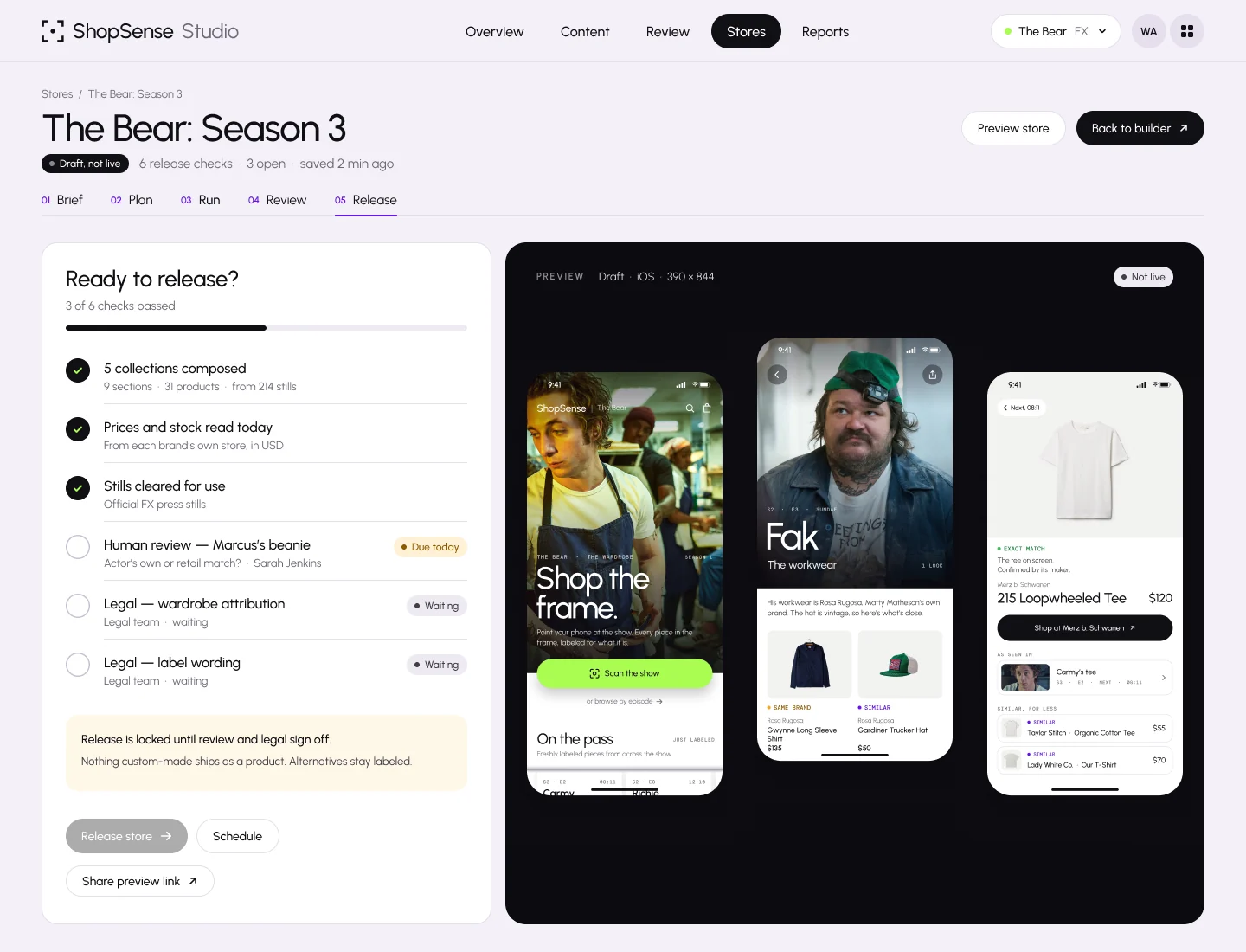
Release is a checklist, not a button. Six checks stand between the draft and a live store: the collections composed, prices and stock read that day from each brand’s own store, the stills cleared, a human review and two legal sign-offs.
Three are done. The store stays locked until a reviewer rules on Marcus’s beanie and legal signs off on the wardrobe attribution and the label wording. Each open check names who it’s waiting on, and the preview beside the list shows the store as it would ship, from the home page to Fak’s look and the product page for Carmy’s tee.
Carry the content into shopping.
Studio and the storefront share the same source and product records, so the reviewer’s call decides what the viewer sees. Carmy’s tee, matched to its maker’s own listing, reaches the store labeled Exact match, and Shop opens the maker’s own store.
Four rules carry that through the store. The lens comes first, because the reason to visit is a scene someone just watched. Every label prints above the brand, so the claim is read before the name. Pieces still being matched stay visible, marked HOLD, and can’t be bought until they’re labeled. Sponsors get a lane of their own and never appear inside an outfit or a scene.
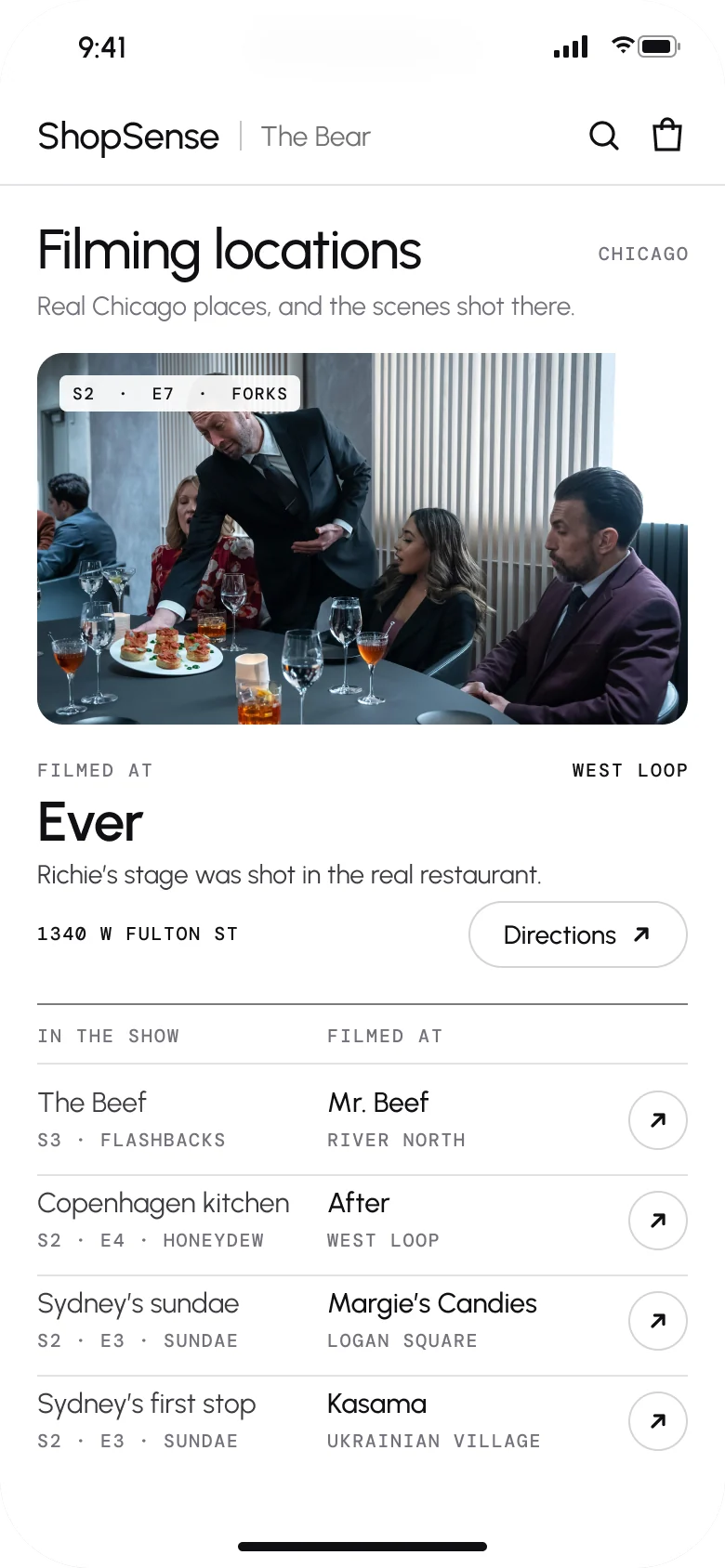
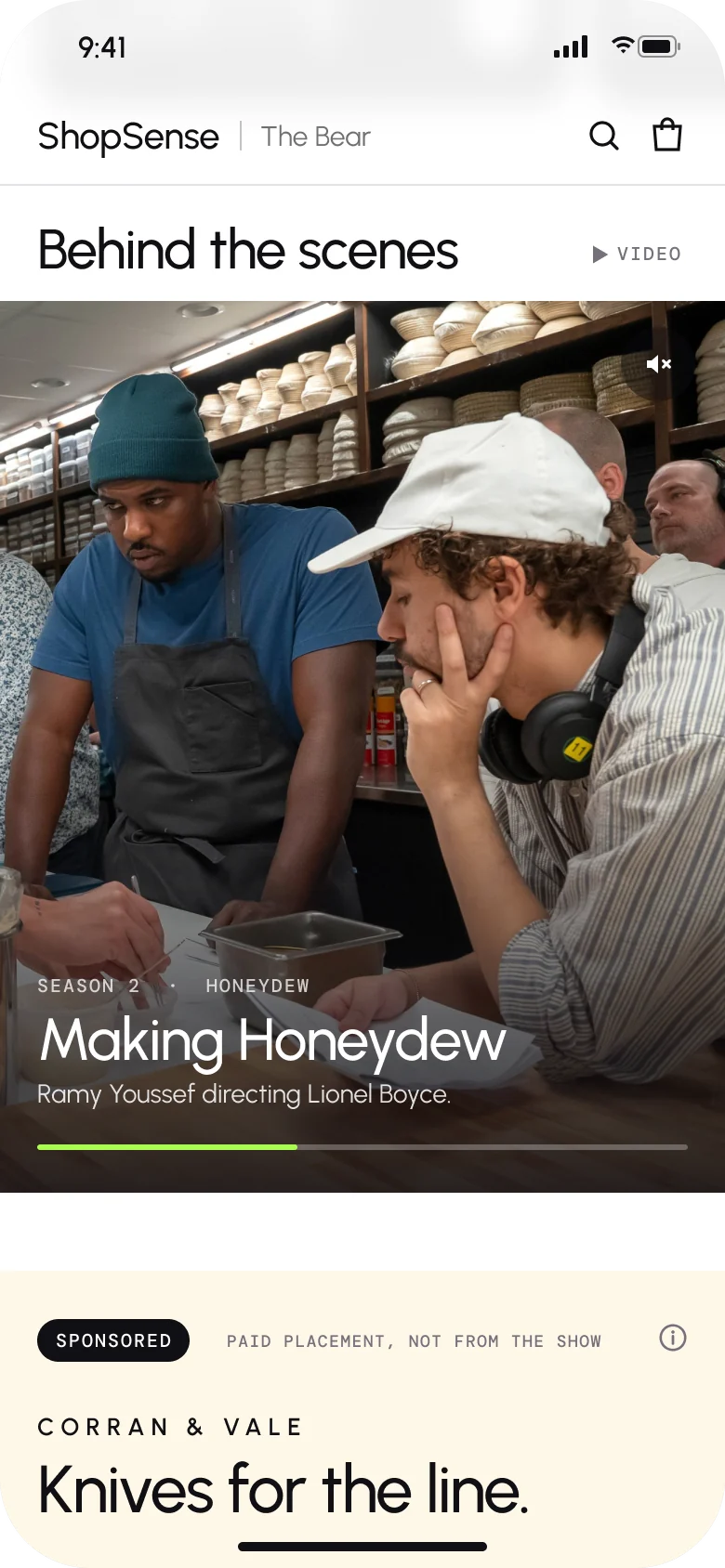
The store also carries the show’s world, because the show is why people come. Filming locations pair each scene with the Chicago place it was shot, and a row offers a piece only where review has labeled one. Behind the scenes is a video module that plays as the page scrolls, here from the set of Honeydew.
The redesign leaves the finding to the agent and moves the judgment into view: a plan before the run, a person on every match the agent can’t stand behind, and a label the viewer reads before the brand.